
Decorative Trees for Poolside Bliss
By Celia Fairchild / Oct 04
Did you know that understanding the dynamics of your sloped garden can transform a challenging landscape into a beautiful oasis? By mastering the techniques of measurement and design, you can create an inviting outdoor space that reflects your style and enhances functionality.
Identifying the severity of your slope is essential for effective garden design. Below are the slope categories and their implications for landscaping.
Easier to manage; perfect for a variety of plants and garden features.
May require terracing or retaining walls for stability and to prevent erosion.
More challenging; consider using ground cover plants and erosion control measures.
Designing a sloped garden can seem challenging, but it presents an exciting opportunity to create a stunning landscape! Understanding the dynamics of your sloped garden will set the foundation for a successful design. By assessing your garden, you can identify its unique features and plan accordingly, ensuring your outdoor space becomes a cherished retreat.
At Ornamental Yard, we believe that every garden, regardless of its slope, can be transformed into a beautiful oasis. Whether it's a gentle incline or a steep hillside, the right approach to design can add character and functionality to your space. Let's dive into the essential techniques for measuring your sloped garden, perhaps even considering elegant landscaping with decorative trees to enhance its appeal.
To create an effective design for your sloped garden, you first need to measure its slope accurately. Here are some practical techniques to help you assess your space:
These techniques will help you gain a clearer understanding of your garden's topography. Once you've measured the slope, it’s essential to identify its severity, as this will influence your design choices.
Accurate measurements are crucial for effective outdoor design. Start by selecting a reference point at the top of your slope, then:
By following these steps, you will have a clear understanding of your garden's slope. This information not only helps in planning but also informs the selection of plants, materials, and drainage solutions.
Understanding the severity of your slope is essential when planning your garden design. Here's how different slope degrees can impact your decisions:
By identifying the severity of your slope, you can tailor your design choices to enhance both aesthetics and functionality. Each slope has its unique characteristics, and with a thoughtful approach, you can create a thriving garden that reflects your personal style! For instance, you might consider elegant shrubs for shady corners on a gentle slope.
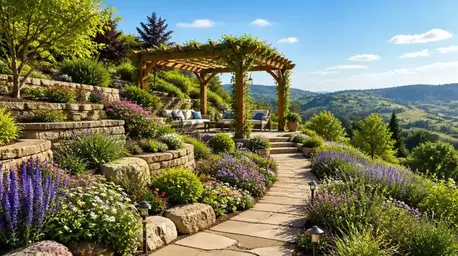
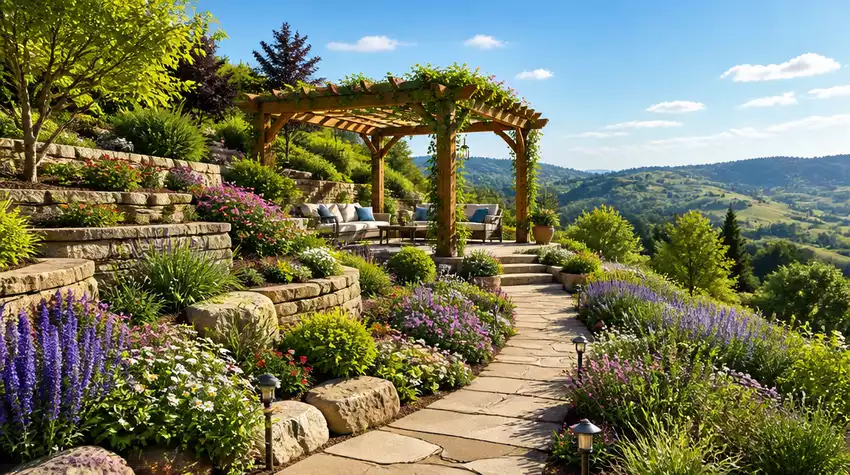
Once you've assessed your sloped garden, it's time to consider how to design it effectively. Terracing can create beautiful and functional spaces, breaking up the slope while providing areas for planting and relaxation. Let's explore how to implement terracing and select the right materials for retaining walls!
Here's a brief recap of the key points discussed so far:
Maintaining a sloped garden can be quite rewarding but requires a bit of planning and dedication. At Ornamental Yard, I understand how crucial it is to establish a routine that focuses on both erosion control and proper plant care. By integrating these maintenance practices into your gardening schedule, you will not only preserve the beauty of your landscape but also contribute to the overall health of your garden.
One effective way to keep your sloped garden thriving is to create a maintenance schedule. This schedule should include regular inspections for erosion, weed control, and plant health. Be sure to dedicate time for seasonal tasks like mulching and fertilizing, which help keep your plants strong and your soil stable. For additional guidance, consider these essential tips for tree care, which can be adapted for shrubs and other plants in your sloped garden.
Every sloped garden can face unique challenges, and knowing how to address these issues is essential for sustainable gardening. If you've ever struggled with soil runoff or plant instability, you're not alone! Many gardeners encounter these problems, but with the right solutions, you can overcome them.
One common issue is the loss of soil due to erosion. To combat this, consider implementing a combination of retaining walls and ground cover plants. These strategies not only stabilize the soil but also enhance the overall aesthetic of your garden. Additionally, ensure that your plants are well-chosen for their location; native plants often handle slope conditions better than non-natives.
When embarking on a sloped garden project, there are several practical considerations to keep in mind. Budgeting is paramount, as it can influence the materials you choose and the extent of your design. At Ornamental Yard, I've seen how a well-planned budget can make the difference between a dream garden and a daunting task.
Start by outlining your project goals and potential costs. This can include everything from soil preparation to plant selection. Don't forget to factor in ongoing maintenance costs as well! Planning ahead ensures you have the resources to keep your garden healthy and vibrant, much like planning for designing your luxurious outdoor space requires careful budgeting.
Visualizing the transformation of a sloped garden can be incredibly motivating! Before-and-after photos can showcase the potential of your outdoor space and ignite your creativity. I love sharing these stories at Ornamental Yard, as they illustrate how thoughtful design can elevate even the most challenging landscapes.
As you plan your sloped garden, think about how seasonal planting can enhance the visual appeal. Choosing plants that thrive at different times of the year not only adds interest but also keeps your garden looking fresh and inviting throughout the seasons. Have a clear vision of how your garden will evolve over time!
Are you curious about how to tackle common concerns in sloped gardens? Engaging with your community can provide valuable insights and foster a sense of belonging. Sharing experiences with others who share your passion can lead to amazing discoveries and solutions!
Whether it’s discussing how to manage access to your garden or sharing tips for accessibility, the community aspect of gardening enriches the experience. At Ornamental Yard, I encourage you to connect with fellow gardeners and exchange ideas for overcoming challenges specific to sloped landscapes.
You can use a carpenter's level on a long board, stretch a string taut between two stakes, or use a digital level for precise measurements. Calculate the percentage by dividing the vertical rise by the horizontal run and multiplying by 100.
Slopes are typically categorized as gentle (0-10%), moderate (10-20%), and steep (20%+), each requiring different design and management approaches.
Terracing helps break up the slope, provides stable areas for planting and relaxation, reduces erosion, and enhances the garden's aesthetic appeal.
Key methods include installing retaining walls, planting ground cover, applying mulch, and ensuring proper drainage to manage runoff.
Start by outlining project goals and estimating costs for materials, labor, and ongoing maintenance. Prioritize essential features like drainage and pathways, and consider DIY options to save costs.
Ground cover plants, native species, and plants with strong root systems are ideal for steep slopes as they help stabilize the soil and prevent erosion.
Join local gardening clubs to share insights and experiences. Ask for advice on managing sloped areas from fellow gardeners. Participate in community gardening projects for hands-on experience. Engage with online forums or social media groups focused on gardening. Consider how enhancing outdoor spaces with light can further elevate your sloped garden's appeal.
As we wrap up this section on maintaining your sloped garden, remember that effective strategies and a solid maintenance routine are key to long-term success. Each step you take in caring for your garden contributes to its beauty and functionality.
Now is the perfect time to embark on your sloped garden project! With the insights and tips shared, you’ll be well-equipped to create an outdoor space that reflects your style and brings joy to your life. So, roll up your sleeves and let your creativity shine!
Here is a quick recap of the important points discussed in the article:
By Celia Fairchild / Oct 04
By Celia Fairchild / Oct 03
By Celia Fairchild / Sep 21