
Decorative Trees for Poolside Bliss
By Celia Fairchild / Oct 04
Transforming the entrance of your home with decorative trees can significantly enhance its charm and appeal. Selecting the right trees and understanding how to arrange them is key to creating a welcoming atmosphere. Ready to elevate your home's first impression?
Understanding the maintenance needs and growth rates of different tree species helps you choose the best options for your landscape.
Pruning Requirements: Moderate
Growth Rate: Fast
Pruning Requirements: Minimal
Growth Rate: Slow
Pruning Requirements: Moderate
Growth Rate: Medium
Pruning Requirements: Minimal
Growth Rate: Medium
Imagine stepping into a home where the entrance feels inviting and warm. Decorative trees play a pivotal role in enhancing curb appeal and creating a welcoming atmosphere. They not only serve as visual markers but also convey a sense of care and attention to detail in your landscaping design.
When planted thoughtfully, these trees can draw the eye toward your entrance, making it the focal point of your yard. A beautifully framed entrance can elevate your home's overall charm, inviting guests to explore what lies beyond. It’s about more than just aesthetics; it’s about creating a feeling of home, and that’s exactly what Ornamental Yard aims to inspire in every homeowner!
Choosing the right trees is key to framing your entrance effectively. Think about aesthetics, climate, and purpose when selecting trees. For instance, do you want a stately presence or a softer look? Knowing the vibe you’re going for will help narrow down your choices.
Consider your local climate as well. Some trees thrive in warmer areas, while others prefer cooler climates. Additionally, think about the purpose of the trees. Will they provide shade, privacy, or simply enhance beauty? Understanding these factors will guide you in selecting the perfect species for your front yard.
There’s a delightful variety of trees to choose from when creating a stunning entrance! Here are some options to consider:
By mixing these varieties, you can craft a dynamic landscape that changes with the seasons. Each tree type brings unique textures and colors, enhancing the visual appeal of your entrance.
Designing your entrance involves a fine balance between symmetry and asymmetry. Paired symmetrical planting can create a formal and classic look, which is often very appealing for traditional homes. On the other hand, varied asymmetrical arrangements can bring a more relaxed, modern feel.
Ultimately, your choice depends on the style of your home and personal preference. Are you drawn to the elegance of symmetry, or do you prefer the creativity of asymmetry? Both methods can work beautifully when executed thoughtfully! For more design ideas, explore our guide on layering plants in garden design.
Layering is a fantastic technique to create depth and intrigue in your landscape. Start with taller trees at the back to provide a backdrop, then gradually taper down to mid-sized shrubs and finally ground covers. This approach not only enhances the visual experience but also promotes biodiversity.
Imagine how the interplay of light and shadow can transform your entrance! By planting your trees in staggered rows, you can create a dynamic backdrop that changes as the seasons shift, just like a beautiful painting.
Small trees can be incredibly effective in framing your entrance without overwhelming it. They’re perfect for anchoring gardens and can be strategically placed to guide the eye toward your front door. Think about varieties like Japanese Maples or Dwarf Fruit Trees, which can provide beauty without taking over the space.
In my experience at Ornamental Yard, I've seen how small trees can create a cozy yet elegant entrance. They allow for personal expression while maintaining a sense of balance in your landscaping. To learn more about selecting the right trees for compact spaces, check out our insights on decorative trees for small gardens.
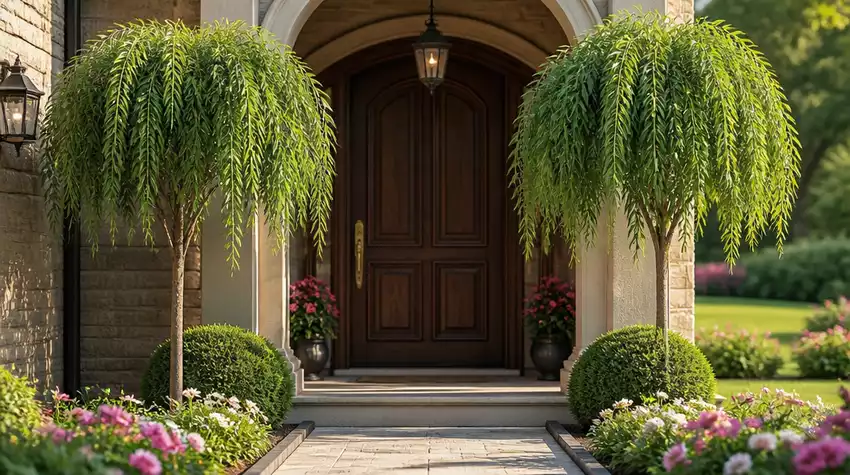
Focal point trees can truly elevate the aesthetics of your entrance. These are the standout trees that draw attention and create visual interest. Consider planting a striking tree like a weeping willow or a flowering cherry near your entrance to serve as a captivating centerpiece.
These trees become conversation starters, offering beauty and charm to your front yard. Remember, it’s all about creating that perfect first impression, and focal point trees can make all the difference!
Here's a brief recap of the key points discussed so far:
When it comes to creating your dream landscape with decorative trees, it's essential to consider the ongoing maintenance and growth of these plants. Selecting the right tree species for your entrance can significantly impact not only its beauty but also the effort you'll need to invest over time. As someone passionate about landscaping, I've seen how choosing the right trees can make all the difference in maintaining a stunning yard!
Before you make your selections, let's explore some key factors that can guide you in making informed decisions. By understanding the maintenance needs and growth rates of different species, you can ensure your landscape remains as breathtaking as it was on day one. For instance, some trees require regular pruning, while others may need little to no maintenance. Let's dive into a handy comparison!
| Tree Species | Pruning Requirements | Growth Rate |
|---|---|---|
| Leyland Cypress | Moderate | Fast |
| Japanese Maple | Minimal | Slow |
| Red Maple | Moderate | Medium |
| Flowering Dogwood | Minimal | Medium |
Understanding your climate is another vital step in choosing the right trees for your landscape. Trees thrive in specific environments, so assessing their suitability based on USDA hardiness zones can help you select species that will flourish in your yard. A quick check of your local climate zone is an excellent place to start!
When you know your zone, it becomes easier to make choices that will benefit your landscape. Here are a few tips to guide you:
Soil quality plays a crucial role in the growth of your trees. Each species has its preferences, and knowing these can help you create a thriving garden. For example, some trees prefer well-drained sandy soil, while others thrive in clay or loamy conditions. Understanding these needs is key to achieving lush growth and beautiful blooms.
As a landscaping enthusiast, I recommend conducting a soil test to determine your soil's pH and nutrient levels. Once you know your soil's characteristics, you can amend it as needed to suit your selected trees. Here are some insights to keep in mind:
Once you've carefully selected and planted your trees, consider how you can further enhance your entrance with strategic lighting! Proper outdoor lighting can create a magical ambiance at night, accentuating the beauty of your framed trees and inviting a sense of warmth and welcome.
Effective lighting techniques can highlight your trees' structure and foliage, making them stand out even after the sun sets. Here are some ideas to get you started: For more insights on this topic, explore our article on enhancing outdoor spaces with light.
Sometimes, a visual representation can make all the difference when planning your landscape. Utilizing diagrams or guides can help you understand effective planting configurations and layering techniques. This will ensure your trees not only look good but also grow well together.
As you plan, consider the spacing and arrangement of your trees based on their mature size. I find that drawings can illustrate where to place taller trees versus smaller ones, ensuring your entrance feels balanced and inviting. You can easily find resources online or seek professional design tools to assist in your planning! Proper tree care is also vital for long-term health, so make sure to review essential tips for tree care.
Here is a quick recap of the important points discussed in the article:
By Celia Fairchild / Oct 04
By Celia Fairchild / Oct 03
By Celia Fairchild / Sep 21